

Slow Pitch Rod for Tuna: The Deep-Sea Conductor’s Baton for Giants
There is a singular, humbling moment in bluewater fishing. It’s not the strike. It’s the moment after. You’ve lifted the rod, felt the weight, and set the hook. But instead of a frantic fight, you’re met with a deep, stubborn, soul-sapping pull. The line angles into the abyss, and your drag emits a low, serious groan. This isn’t a fish swimming; it’s a force of nature deciding your fate. I learned this on a lump 100 miles off the coast, connected to what I thought was a big yellowfin. My heavy stand-up rod was bent double, my muscles screaming. It took 45 minutes of pure torture to bring color… only to see a 80-pound class bigeye tuna, a species known for its deep, dogged fight, give a lazy tail beat and disappear back into the deep. I was broken. The captain simply said, “Wrong tool. You fought the fish andthe water. A slow pitch rod… it fights foryou.” He was right.
Targeting tuna, especially deep-dwelling species like bigeye, yellowfin, and bluefin, with slow pitch jigging isn’t a fad; it’s a revolution in efficiency. It’s trading brute force for biomechanical intelligence. And at the heart of this revolution is a tool so specialized, so perfectly tuned, that calling it a “rod” feels inadequate. It’s a lever, a shock absorber, and a trigger, all in one. Let’s talk about the slow pitch rod for tuna. 🎻💥
The Physics of Persuasion: Why a Slow Pitch Rod Works on Giants
Conventional thinking says: big fish, heavy rod. Slow pitch philosophy says: big fish, smartrod. A tuna, especially one holding deep, is an energy-conservation machine. A frantic, “jig-and-rip” action from a stiff rod often triggers follows or half-hearted swipes. The slow pitch methodology, pioneered in Japan and now dominating offshore tournaments, is based on triggering the instinct to consume a dying, easy meal.
The magic is in the rod’s parabolic action. When you impart a short, sharp lift, the rod doesn’t just bend at the tip; it loads deeply into the mid-section and butt, storing elastic energy like a drawn bow. As it recovers, it unloads that energy not as a violent jerk, but as a controlled, wide-amplitude pulse that travels down the line. This pulse manipulates the jig into a fluttering, spiraling, utterly convincing “death spiral.” For a tuna, this isn’t something to chase; it’s something to intercepton the fall. The bite is often a confident, solid THUDas it inhales the fluttering jig. The rod’s deep bend then acts as a phenomenal shock absorber on the strike and during the fight, protecting light leaders and tiring the fish efficiently by making it fight the rod’s constant, yielding pressure, not just your arms.
Anatomy of a Deep-Sea Maestro: Decoding the Rod Specs
Not all slow pitch rods are built for the arena of tuna. This is where specs move from suggestions to commandments. Let’s decode the tools, starting with the benchmarks from your image.
-
The Gold Standard: The Daiwa Saltiga Slow Pitch Rod
When you see the Daiwa Saltiga name, you’re looking at the F1 car of the category. These rods are the result of obsessive engineering. They feature proprietary carbon constructions (like Daiwa’s “B4” or “B5” technology) that create an impossibly sensitive yet immensely powerful parabolic curve. The guides are typically high-grade, corrosion-resistant titanium or hardened stainless to handle the friction of heavy braided fishing line under extreme load. The reel seat is a vault. Choosing a Saltiga model is about selecting the perfect jig weight rating (e.g., 200-400g, 300-500g) for your target depth and current. It’s a no-compromise tool for the angler who views their gear as a long-term investment in performance.
-
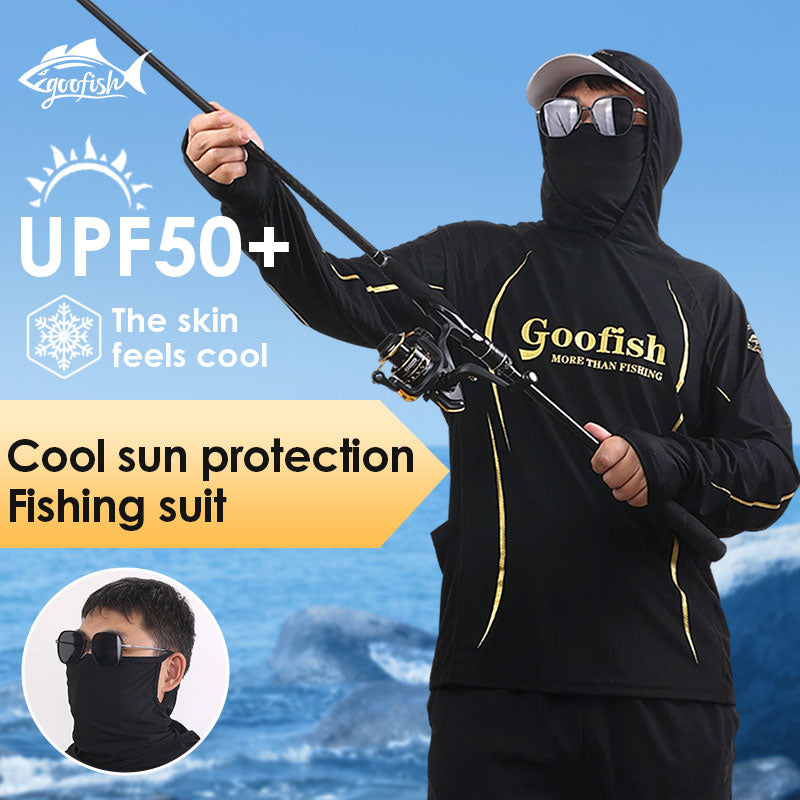
The Strategic Entry Point: The Goofish Slow Pitch Jig Pole Combo
The brilliance of a goofish slow pitch jig pole combo is synergy and accessibility. For an angler new to the technique, sourcing a rod, reel, and line separately is daunting. A well-designed combo solves this. The rod is engineered with a true slow pitch action—parabolic, sensitive, and rated for appropriate jig weights (e.g., 150-300g for school tuna). It is pre-matched with a reel that has the necessary high-speed retrieve (often 6.2:1 or higher) and a smooth, powerful drag. This removes the guesswork and provides a balanced, ready-to-fish system that lets you learn the technique without a four-figure entry fee. It’s the smart choice for turning curiosity into capability.
-
The Performance-Value Benchmark: The Goofish Best Slow Pitch Jigging Combo
This takes the combo concept and optimizes it for serious performance. The goofish best slow pitch jigging combo likely represents the peak of their engineering for this technique. Think upgraded components: perhaps a reel with a sealed drag, more bearings on critical points, and a carbon composite handle. The rod might use a higher-modulus carbon blank for increased sensitivity and a faster recovery speed, crucial for working the jig and feeling subtle bites at great depths. This is the combo for the angler who knows this is their primary offshore method and wants maximum performance per dollar, a system that can legitimately stand up to yellowfin and bigeye in the 100-200lb class.
Building Your Deep-Sea Orchestra: The Complete System
Your rod is the conductor. But the symphony needs every instrument in tune.
-
The Reel: The Precision Winch
Your slow pitch reel must be a masterpiece of ergonomics and power. A 4000-6000 size specialized slow pitch spinning reel is ideal. It must have a silky-smooth, multi-disc drag capable of 25-40 lbs of pressure. The high gear ratio (6.0:1+) is for quickly recovering line on the drop and gaining ground on the fight. Critical for tuna: a long-stroke spool that dramatically reduces line memory and coils, ensuring your braid peels off flawlessly on the jig’s fall.
-
The Line: Your Telegraph Wire
This is non-negotiable. Fill the spool to 90% capacity with 50-80 lb braided fishing line. The thin diameter reduces water resistance, allowing your jig to fall faster and straighter to the zone. The zero-stretch is your direct neural link to the jig and the bite. You’ll feel the jig’s flutter and the tuna’s thump as if it were in your hands.
-
The Leader: The Invisible Shield
Connect your braid to a 10-20 foot leader of 80-130 lb fluorocarbon. For wary tuna in clear blue water, fluorocarbon’s near-invisibility is a major advantage. Its superior abrasion resistance is your insurance against the fish’s abrasive tail and body during the fight. The connection knot must be flawless—the FG Knot is the undisputed champion for its strength and slim profile.
-
The Lure: The Deceiver
Slow pitch jigs for tuna are typically flat-sided, wide, and heavy (100-500g). They are engineered to maximize the fluttering action. In darker waters or deep low-light, a glow jig that has been “charged” with a bright light can be the difference between a look and a commit. The jig’s weight, matched precisely to your rod’s rating, is what allows the system to perform its magic.
The Deep Blue Rhythm: Technique for Tuna
The cadence is meditative but purposeful.
-
Find the Zone: Use your sonar to locate bait and marks at depth (150-300 feet is common).
-
The Lift & Fall: With the rod tip pointed at the water, use a sharp wrist flick to lift the rod tip 2-3 feet. Let the rod’s parabolic action do the work. As it recovers, follow the jig down with your rod tip, keeping a slight bend. This is the “active fall” where 90% of strikes occur.
-
The Strike: You won’t miss it. It’s a heavy “telephone ring” or your line simply speeding up. Do NOT jerk. Reel down fiercely until you feel the full weight, then lean into a firm, sweeping hookset. The rod’s bend will do the rest.
-
The Fight: Let the rod work. Keep steady pressure. Use the high-speed retrieve on the down-pump to gain line. Your goal is to keep the fish’s head coming up, fighting the parabolic curve of your slow pitch tuna rod.
The Final Dive: It’s About Efficiency, Not Just Effort
Fighting a tuna on a perfectly balanced slow pitch system is a different experience. You’re not just stronger; you’re smarter. The rod absorbs head shakes, the reel’s drag administers justice, and the line transmits information. You are managing a complex, efficient energy-transfer system designed for one purpose: to convince and conquer the ocean’s premier predators.
Whether you start with a synergistic goofish slow pitch jig pole combo or invest in the pinnacle with a Daiwa Saltiga, you’re choosing to speak the tuna’s language. You’re trading shouts for a whispered, irresistible secret. Now, go find that deep, stubborn pull, and this time, be ready. 🎣✨



0 comments